
In the cold, dry months of winter, many of us notice our usual creams and lotions just don’t seem to cut it anymore. That’s where balms and salves truly shine.
Unlike lotions and creams, which are made with a high percentage of water, salves are typically water-free and rich in oils, butters, and waxes.
In winter, when humidity is low, and moisture evaporates quickly from the skin, water-based products can actually contribute to dryness if they’re not sealed in properly.
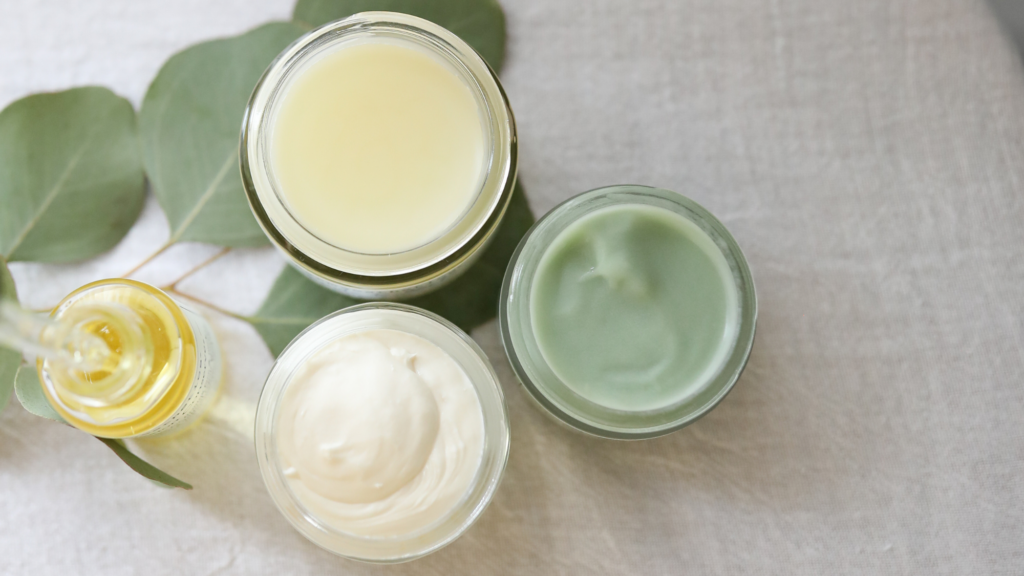
Balms and salves work differently. They form a protective barrier on the skin, helping to lock in existing moisture and shield against cold air, wind, and indoor heating. This makes them especially effective for dry hands, cracked cuticles, lips, elbows, heels, and anywhere skin feels tight or compromised. Try layering them over your moisturizer to lock everything in.
Think of lotions and creams as hydrators—and balms and salves as protectors. During winter, our skin often needs less water and more defense.
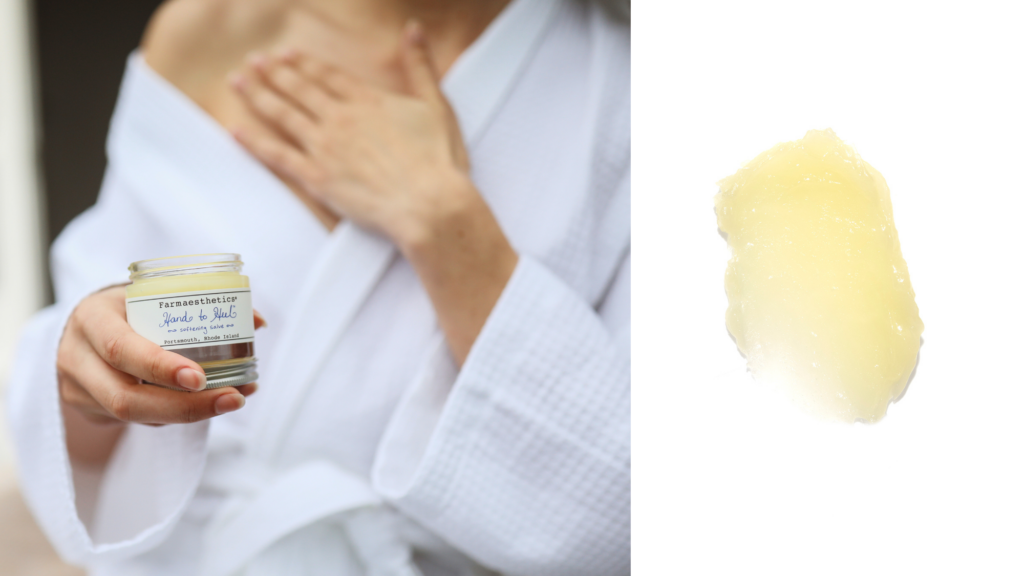
When it comes to choosing salves, we turn to those with beeswax rather than with petroleum or synthetic ingredients. Petroleum-based products can create the illusion of hydration by sealing the skin, but they don’t actually nourish it, and because they’re derived from non-renewable sources, they don’t align with a more natural, skin-supportive approach. Synthetic additives can also be irritating for sensitive or winter-stressed skin. We prefer plant-based oils, butters, and waxes that work with the skin, delivering nutrients while still providing the protective barrier winter demands.
Reaching for a balm is a simple shift that can make a noticeable difference, keeping skin comfortable, nourished, and resilient all season long.
With you in winter resilience,
–The Farmaesethetics Team
Comments (0)
Back to Stillroom Stories